



KNP PSHB Monitoring

EARLY WARNING AGAINST

POLYPHAGOUS SHOT-HOLE BORER

Wild2Earth, in collaboration with SANParks, monitors PSHB to detect threats early.

Joint monitoring allows faster detection and better protection of Kruger’s ecosystems.


ABOUT PSHB

What is PSHB?

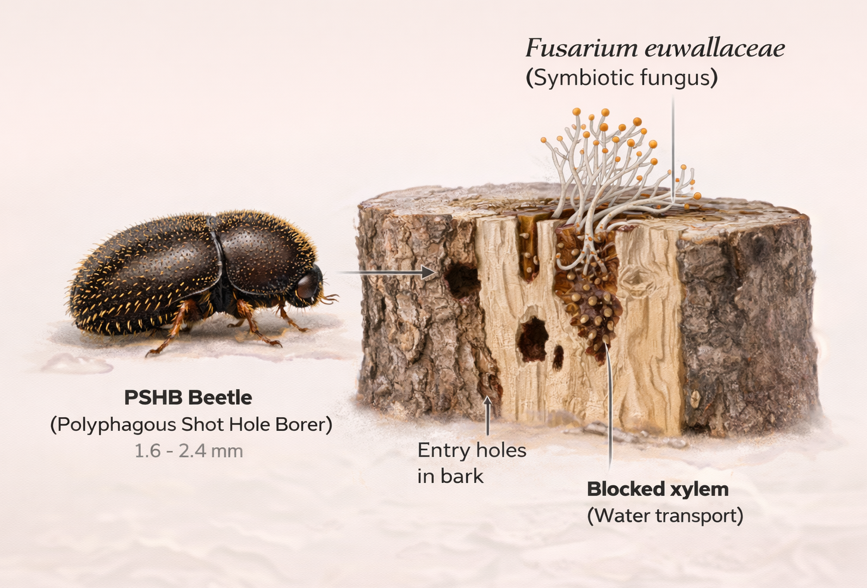
  • PSHB is a tiny ambrosia beetle, about 1.8–2.5 mm in length (roughly the size of a sesame seed).
  • It belongs to a group of beetles that have symbiotic relationships with fungi. Unlike most wood-boring insects that feed on wood, PSHB feeds on fungus it farms inside trees.

The Fungus: Fusarium euwallaceae

  • PSHB carries fungal spores in specialized mouthparts (mycangia).
  • When it bores into a tree, it introduces Fusarium euwallaceae, a fungus that spreads through the tree’s vascular tissue.
  • The fungus grows inside the tree, providing food for the beetle larvae — but it is highly pathogenic to many trees, leading to wilting, dieback, and death

 Life Cycle

  • PSHB has a short life cycle (about 1 month under warm conditions) and can breed continuously in suitable climates.
  • The female lays eggs in galleries inside the tree.
  • Larvae feed on the fungus and mature within the tree.
  • Females can reproduce without males (parthenogenesis), and one female can found an entire new population.
  • Adult females emerge and fly short distances (typically within 2 km) or are transported longer distances via infested wood.

What Trees Are Affected?

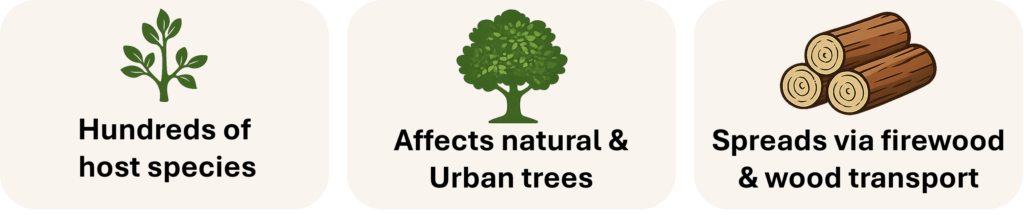
  • PSHB attacks over 130 tree species in South Africa, of which about 30–40 are reproductive hosts (i.e., the beetle completes its life cycle inside them).
  • These include:
    • Indigenous species: e.g. Coral trees (Erythrina spp.), Forest bushwillows (Combretum kraussii), and Cape willow (Salix mucronata).
    • Urban trees: London plane, avocado, box elder (Acer negundo), maple, oak, and others.
    • Fruit trees: Avocado, pecan, and macadamia are vulnerable, especially in orchards.

Signs of Infestation

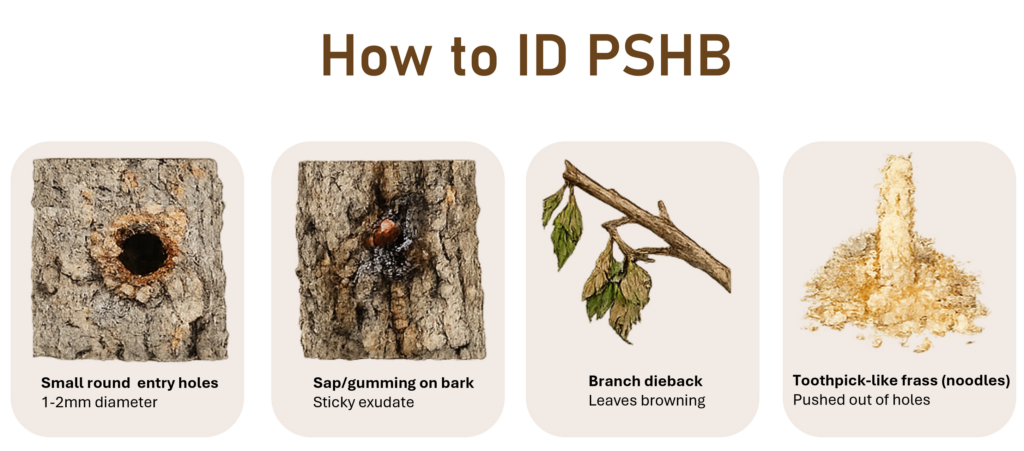
  • Tiny holes in the bark, about the size of a pinhead.
  • Gumming or weeping around the boreholes.
  • Frass noodles: Toothpick-like strands of compacted sawdust
    sticking out of holes.
  • Canopy dieback, wilting leaves, branch die-off.
  • Dark staining of wood beneath the bark due to fungal colonization.

WHY MONITORING MATTERS

Monitoring is an early warning system, helping detect PSHB infestations before they spread. Early detection allows timely management to protect Kruger’s trees and ecosystems.

How It Spreads

  • Naturally: through short-range flying (wind-assisted).
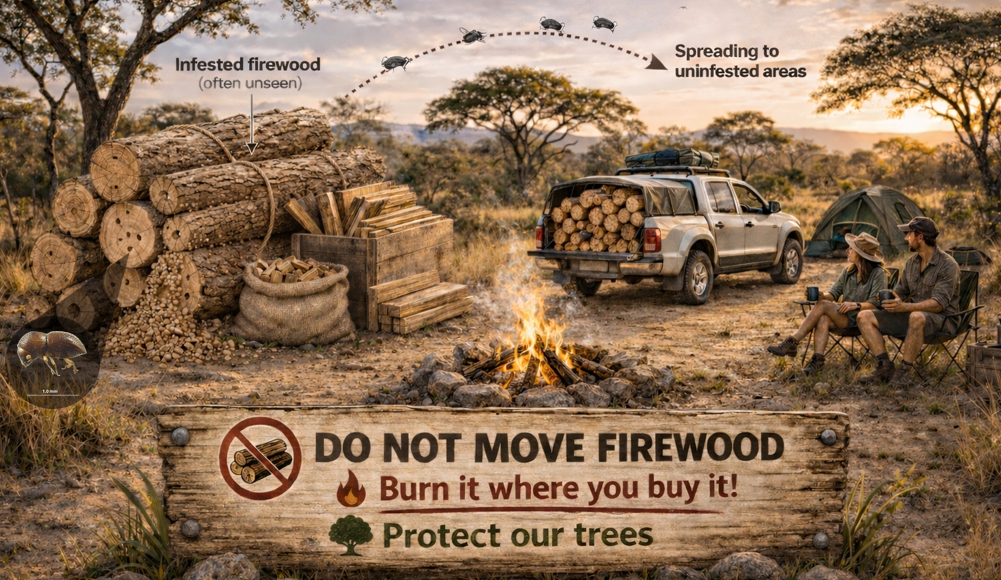
  • Human-mediated: movement of infested material:
    • Firewood
    • Tree trimmings and offcuts
    • Nursery plants
    • Wooden pallets and packaging

OUR WORK

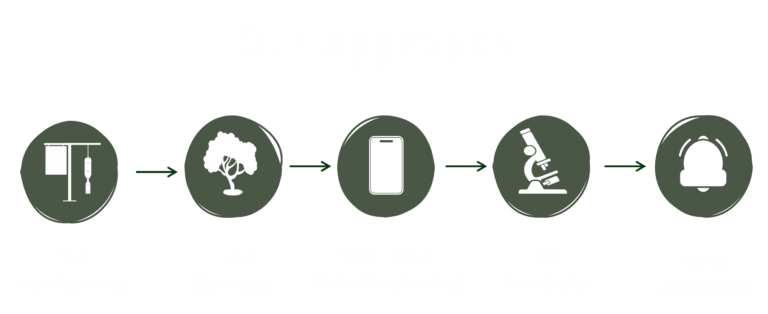
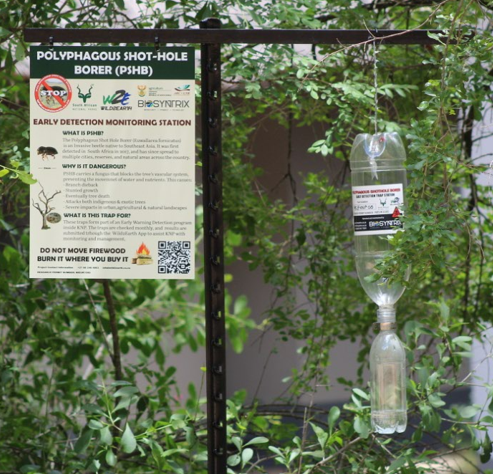
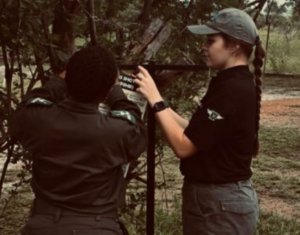
1. Trap Servicing
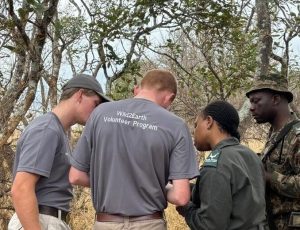
IMG-20251016-WA0019
2. Tree Surveys
3. Lab Work
5. Reporting

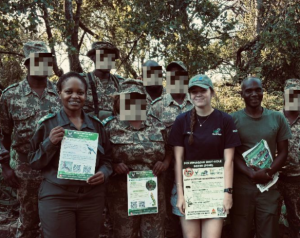
Get Involved with PSHB Monitoring through W2E’s Volunteer Program in collaboration with SANPArks!

Our app.
Your voice.One Earth.